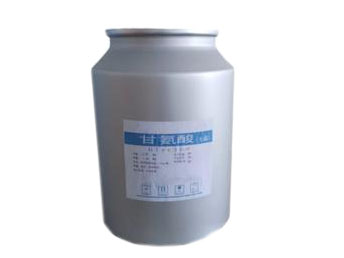
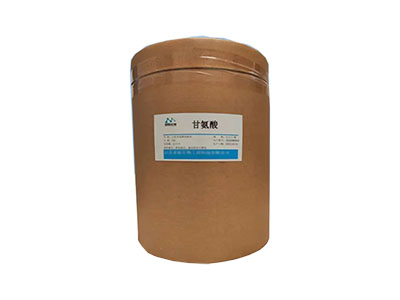
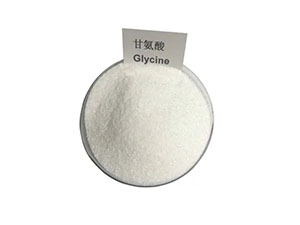
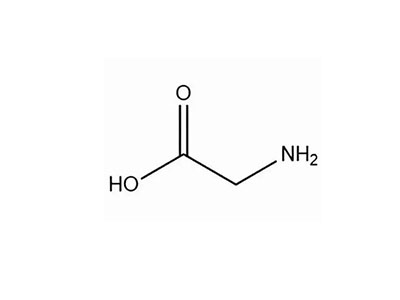
Glycine
Standards: USP39 ; Industrial grade
CAS: 56-40-6
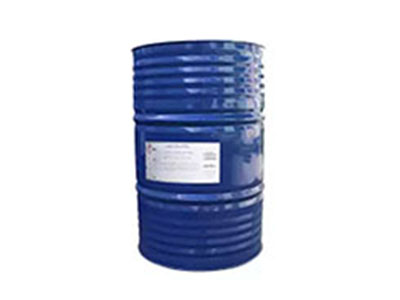
Package: 25KG/drum
Origin: China
Payment terms: T/T, LC, DA, OA
MOQ: 100kg
Contact us
- No.420 Zhonghua Road,Qinghuai District, Nanjing,China 210001
- 008618005174481
- Mr.Sam
- sales@nanjingchem.com

Product Introduction
Glycine is an important non essential amino acid in the human body and also the simplest amino acid in structure. It is widely involved in protein synthesis, metabolic regulation, and nervous system function. Although it can be synthesized by the body itself, it may become a “conditionally essential amino acid” under specific physiological or pathological conditions and needs to be obtained through diet or supplements.
1、 Core physiological functions and mechanisms of action
Glycine accounts for about 35% of the total amino acids in collagen, and its small molecular structure allows the collagen triple helix to tightly wrap, which is crucial for skin elasticity, bone strength, joint health, and wound healing.
In the spinal cord and brainstem, glycine serves as the main inhibitory neurotransmitter, triggering chloride ion influx by activating glycine receptors (GlyR), reducing neuronal excitability, and regulating motor and sensory signal transmission. Its functional impairment is closely related to hyperalgesia and spastic diseases such as tetanus. Recent studies have revealed that regulating the spinal glycine transporter GlyT2 can close the “gate” of neuropathic pain, providing direction for the development of new analgesics.
2、 Dietary sources and supplementary recommendations
Natural food sources: Foods rich in collagen are the main sources, such as bone broth, chicken feet, pigskin, fish skin, beef tendon, etc; High protein foods such as meat, dairy products, and beans also contain a certain amount of glycine.
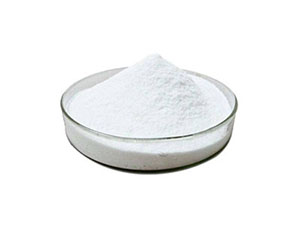
Supplement form: There are powder, capsule and other forms available on the market, commonly used to improve sleep, support joint health or enhance antioxidant capacity.
3、 Expansion of Industrial and Agricultural Applications
Food industry: used as a flavor enhancer, preservative, and sweetness enhancer in beverages and meat products, it can alleviate acidic and alkaline tastes and mask bitterness.
In the field of medicine, it is used for amino acid infusion, whole nutrition preparations, and the synthesis of various API.
Agriculture and chemical industry: It is a key raw material for synthesizing herbicide glyphosate and can also be used as a feed additive to promote animal growth; In plant nutrition, glycine can promote root development and improve photosynthetic efficiency.