
Phenol
CAS: 108-95-2
Origin: China
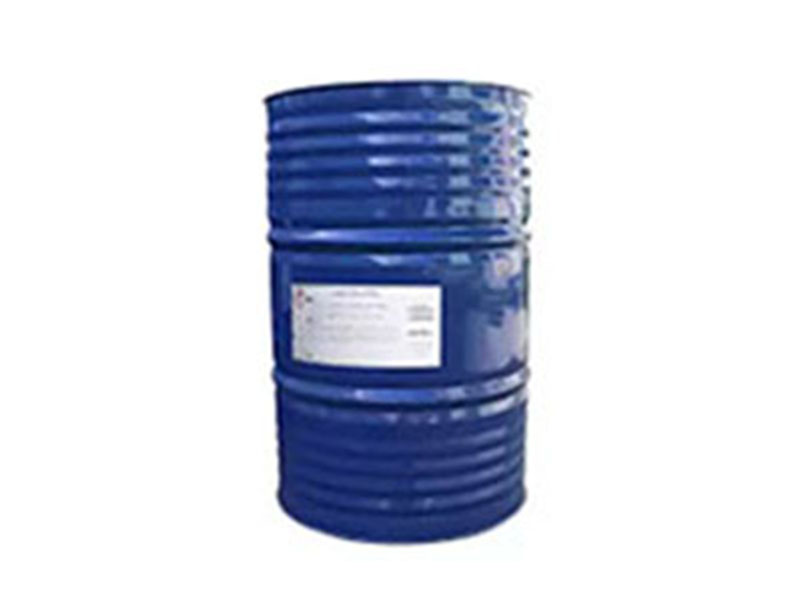
Package: 200kg/drum
Use: Chemical raw material
Payment terms: LC at sight / OA / DA / DP / TT
MOQ: 500KG
Contact us
- No.420 Zhonghua Road,Qinghuai District, Nanjing,China 210001
- 008618005174481
- Mr.Sam
- sales@nanjingchem.com

Product Introduction
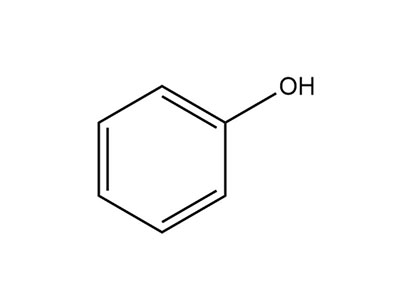
Phenol, with the chemical formula C6H5OH, commonly known as carbolic acid, is a colorless needle-like crystal with a distinctive odor, belonging to aromatic compounds and serving as an important raw material in organic chemical industry.
1. What’s Phenol ‘s physical properties ?
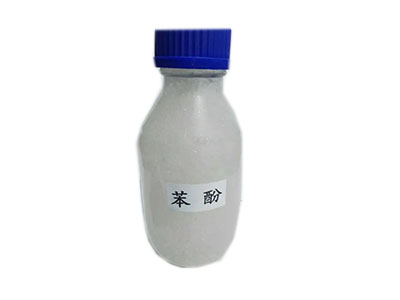
Appearance and Odor: Pure phenol is a colorless, transparent needle-like crystal. When exposed to air, it gradually turns pink, red, or even dark brown due to oxidation. It has a pungent, characteristic odor.
Solubility: Slightly soluble in cold water but miscible with water in any proportion above 65°C. It is readily soluble in organic solvents such as ethanol, ether, and chloroform.
Melting and Boiling Points: Melting point is 43°C, and boiling point is 182°C. It is nearly solid at room temperature and melts with slight heating.
Toxicity: Highly corrosive and toxic. Skin contact can cause burns, whitening, pain, or even ulceration. Inhalation of vapors or ingestion can damage the respiratory tract, digestive system, and nervous system. It is classified as a hazardous chemical.
2. What is Phenol ‘s chemical properties ?
Weak Acidity: The hydrogen atom on the hydroxyl group of phenol is somewhat reactive and can ionize to release a small amount of H⁺. Its acidity is weaker than carbonic acid but stronger than water and alcohols. It reacts with strong bases (e.g., NaOH) to form sodium phenoxide, a reaction useful for phenol purification.
Substitution Reactions: The hydrogen atoms on the benzene ring readily undergo electrophilic substitution. For example, phenol reacts with bromine water at room temperature to form a white precipitate of 2,4,6-tribromophenol, a reaction often used for qualitative testing of phenol.
Color Reaction: Phenol reacts with ferric chloride solution to form a purple complex, a characteristic test for phenol identification.
Oxidation Reactions: Easily oxidized, even by oxygen in the air, forming quinones that darken its color. Strong oxidizers (e.g., potassium permanganate) can oxidize it to carbon dioxide and water.
3. What is Phenol ‘s main applications ?
Chemical Raw Material
This is the most critical use of phenol, serving as a precursor for many important chemical products:
Production of Phenolic Resins (Bakelite): Phenol reacts with formaldehyde to form phenolic resins, which exhibit high-temperature resistance and excellent insulation properties, widely used in electrical switches, sockets, and Automotive parts.
Production of Bisphenol A: A key raw material for epoxy resins and polycarbonates, with polycarbonates used in water bottles, CDs, and medical devices.
Production of Caprolactam and Adipic Acid: Used in synthesizing nylon 6 and nylon 66 synthetic fibers.
Medical and Disinfection Applications
Phenol has bactericidal and bacteriostatic properties and was historically used as a disinfectant. Due to its high toxicity, direct use is now limited:
– Low-concentration phenol solutions were once used for skin and instrument disinfection but are now more commonly employed in preparing cresol soap solutions (Lysol) for environmental disinfection.
– Phenol derivatives (e.g., salicylic acid) are raw materials for drugs like aspirin.
Other Applications
Solvent: Used in organic synthesis to dissolve water-insoluble organic compounds.
Pesticide and Dye Synthesis: Used to produce various insecticides, fungicides, and acid dyes.
4. What are Phenol ‘s precautions when you use it ?
Phenol is highly corrosive and toxic. Protective gloves, goggles, and masks must be worn during handling. It should be stored in a sealed, light-proof container to prevent oxidative degradation.
