Phthalic anhydride
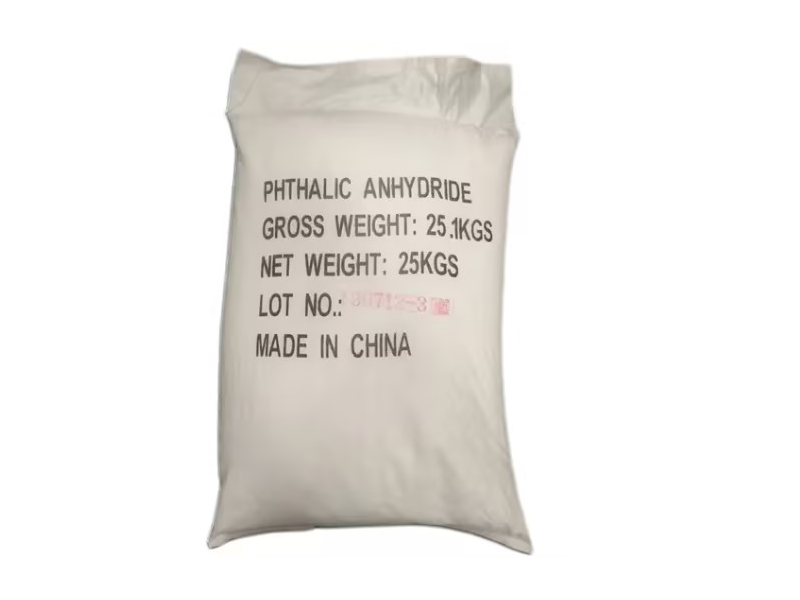
CAS: 85-44-9
MF: C8H4O3
Content: 99%
Origin: China
Package: 25kg per bag
Contact us
- No.420 Zhonghua Road,Qinghuai District, Nanjing,China 210001
- 008618005174481
- Mr.Sam
- sales@nanjingchem.com

Product Introduction
Nanjing Chem Co.,Ltd is one of the leading Phthalic anhydride (PA ) CAS 85-44-9 suppliers and also a professional Chemical raw materials manufacturer in China.
Phthalic anhydride Introduction |
| Phthalic anhydride (PA, CAS 85-44-9) is a five membered cyclic anhydride formed by dehydration of adjacent dicarboxyl groups on the benzene ring. Its molecular formula is C8H4O3, molecular weight is 148.11, and it is a white needle/scale shaped crystal. It is one of the largest organic anhydrides in the world, with core applications as a plasticizer, unsaturated polyester resin, and alkyd resin. The latest research focuses on green catalytic synthesis, high-performance material modification, and environmentally friendly alternative technologies.
|
Phthalic anhydride Usage and finding |
| Plasticizer (about 60% -70%): esterified with octanol/isooctanol to form phthalates such as DOP, DINP, DIDP, etc., used for PVC soft products (wires and cables, artificial leather, films) to improve flexibility and processability; The demand for environmentally friendly alternatives such as DOTP and DINCH is rapidly increasing. Unsaturated polyester resin (UPR, about 20% -28%): condensed with ethylene glycol, maleic anhydride, etc., used for fiberglass (wind turbine blades, lightweight automotive components), artificial marble, anti-corrosion coatings, accounting for the second largest application field of phthalic anhydride. Alkyd resin (about 9% -10%): condensed with glycerol and fatty acids to produce industrial paint, wood paint, and automotive paint. The paint film has strong adhesion and good weather resistance, and is used for construction and mechanical coating. Fine Chemicals and Others (approximately 5% -10%): Dyes and pigments: synthetic phthalocyanine blue/green, permanent violet, etc., color fastness level 4-5, used in inks and coatings; Pharmaceutical pesticides: production of phenolphthalein, imidacloprid, glyphosate, sodium saccharin, etc; Rubber and epoxy: universal anti scorching agent (to prevent rubber from burning), epoxy resin curing agent (hot deformation temperature 110-147 ℃). 3、 Latest research progress from 2024 to 2025 Green catalytic synthesis High efficiency vanadium based catalyst modification: Adding Mo/W additives improves the selectivity of o-xylene oxidation to 98.5%, reduces by-product maleic anhydride by 30%, and reduces energy consumption by 15%. It has been tested and applied in Shandong Hongxin and other facilities. Photothermal synergistic oxidation: TiO ₂/GO composite photocatalyst is used to achieve gas-phase oxidation of naphthalene to phthalic anhydride at 300 ℃, with a conversion rate of 92%, saving 20% energy compared to traditional processes and reducing NO ₓ emissions. Biomass based route: using ortho benzaldehyde as raw material, enzyme catalyzed oxidation closed loop to produce phthalic anhydride, atomic utilization rate>95%, no heavy metal residue, suitable for pharmaceutical grade intermediate production. High performance materials and modification Phthalic anhydride based polyimide (PI): Low dielectric (Dk<3.0) PI film prepared by copolymerization with diamine, used for 5G high-frequency copper-clad laminates, with temperature resistance up to 350 ℃ and dielectric loss<0.001, has entered small-scale production. Flame retardant polyester: Phthalic anhydride is copolymerized with phosphorus containing diols to prepare UL94 V-0 grade halogen-free flame retardant UPR, with an oxygen index of ≥ 32%, which is used as a composite material for new energy vehicle battery packs. Degradable polyester: Phthalic anhydride is copolymerized with adipic acid and 1,3-propanediol to synthesize biodegradable PBAT blends, with a 40% increase in elongation at break and a 15% reduction in cost. Environmental substitution and recycling Biobased plasticizer: An environmentally friendly plasticizer synthesized from phthalic anhydride and plant-based isooctanol (derived from palm oil), with a 60% reduction in migration rate. It has passed the EU REACH certification and is used as a food contact material. Phthalic anhydride wastewater treatment: The new MOF adsorption material has an adsorption capacity of 120 mg/g for phthalic anhydride wastewater, a regeneration rate of>90%, and a treatment cost reduction of 40%. It has been put into use in a chemical plant in Jiangsu. Waste UPR depolymerization and recycling: Using phthalic anhydride as a depolymerizer, waste fiberglass is depolymerized into monomers under microwave assistance, with a recovery rate of>85%, which can be directly used for the synthesis of new resins. 4、 Summary Phthalic anhydride is a key intermediate connecting basic chemical and materials industries, and its application is transitioning towards environmental protection and high performance; The latest research has made breakthroughs in green technology, high-end materials, and recycling, which not only meets the goal of carbon neutrality, but also supports the development of emerging industries such as new energy and electronic information. |