Product Introduction
| Pigment |
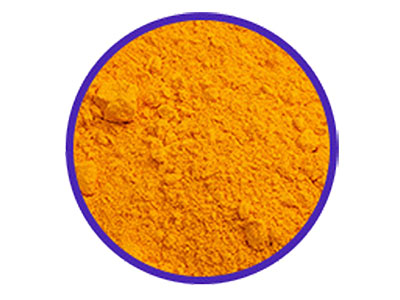
| Pigment Orange 13 (C.I. 21110, CAS 3520-72-7) is a classic bisazo pyrazolone organic pigment, commonly known as Permanent Orange G. It exists in the form of a yellowish-orange powder, featuring high tinting strength and good gloss, and is widely used in inks, coatings, rubber and other fields. Details are elaborated below from three aspects: core information, characteristics and applications. Basic information: - Pigment Orange 13 belongs to the class of bisazo pyrazolone pigments and is prepared by the diazotization of 3,3′-dichlorobenzidine followed by coupling with 1-phenyl-3-methyl-5-pyrazolone.
- It appears as a yellowish-orange powder, is insoluble in water, has a density of approximately 1.55, and a molecular weight of 623.49.
- Its key performance indicators are as follows: light fastness grade 4–5, heat resistance 180–200℃ (up to 200℃ for short periods), acid and alkali fastness grade 5, and moderate migration fastness (prone to migration in flexible PVC).
|
Pigment Orange 13 (C.I. 21110, CAS 3520-72-7) is a classic bisazo pyrazolone organic pigment, commonly known as Permanent Orange G. It exists in the form of a yellowish-orange powder, featuring high tinting strength and good gloss, and is widely used in inks, coatings, rubber and other fields. Details are elaborated below from three aspects: core information, characteristics and applications.
Basic information:
- Pigment Orange 13 belongs to the class of bisazo pyrazolone pigments and is prepared by the diazotization of 3,3′-dichlorobenzidine followed by coupling with 1-phenyl-3-methyl-5-pyrazolone.
- It appears as a yellowish-orange powder, is insoluble in water, has a density of approximately 1.55, and a molecular weight of 623.49.
- Its key performance indicators are as follows: light fastness grade 4–5, heat resistance 180–200℃ (up to 200℃ for short periods), acid and alkali fastness grade 5, and moderate migration fastness (prone to migration in flexible PVC).
Tinting Strength and Gloss: It features high tinting strength and excellent dispersibility. It can impart high gloss and uniform color coverage to substrates, making it suitable for applications with high-gloss requirements.
Fastness Performance: It has outstanding detergent fastness and water fastness, along with good vulcanization resistance, which makes it compatible with the rubber vulcanization process. It exhibits moderate solvent fastness and is stable to most common solvents. However, its light fastness and migration fastness are only average; thus, dosage control is required for long-term outdoor use or applications in flexible PVC.
Process Compatibility: It has good compatibility with water-based and solvent-based systems, and can be applied in various printing and coating processes. With migration resistance in rubber, it is a common choice for rubber coloring.
Ink Industry: It is suitable for water-based inks, offset inks, nitrocellulose inks, packaging inks and UV packaging inks, especially for paste inks. It is compatible with multiple printing methods such as flexography and gravure printing.
Coatings and Painting: It is used in industrial baking finishes, air-drying paints, interior wall paints, powder coatings, metal decorative paints and automotive coatings. It is also applicable for coloring paint printing pastes, leather and adhesive base pastes.
Rubber and Elastomers: Owing to its vulcanization resistance and migration resistance, it is widely used in natural rubber, latex and synthetic rubber products, such as swimming gear, sponges and rubber accessories.
Other Applications: It can be used in plastics (excluding flexible PVC, such as PE, PP, resins for powder coatings, etc.), viscose fiber base pastes, stationery and wood coloring.
- It is not recommended for use in flexible PVC, as it tends to cause migration and bleeding.
- For long-term outdoor exposure scenarios, light fastness should be evaluated, and light stabilizers should be incorporated if necessary.
- For high-temperature processing (e.g., exceeding 200℃), processing time must be controlled to avoid shade deviation or decomposition of the pigment.