
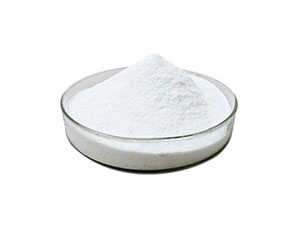
Glycine (Food Grade)
CAS: 56-40-6
Specification: Food grade
Use: Food additive
Package: 25kg per bag
Origin: Made In China
Contact us
- No.420 Zhonghua Road,Qinghuai District, Nanjing,China 210001
- 008618005174481
- Mr.Sam
- sales@nanjingchem.com

Product Introduction
Glycine (Food Grade) — 98.5% Aminoacetic Acid for Taste and Nutrition
Product Overview
Glycine (aminoacetic acid, CAS 56-40-6) is the simplest proteinogenic amino acid and the sweetest one, with a clean, mildly sweet taste and no bitter aftertaste. Food-grade glycine is a white crystalline powder, freely soluble in water (about 25 g per 100 mL at 20 °C) and stable under normal processing heat. It is listed on the FDA food substances list, carries INS 640, and is supplied to FCC, USP and EP monograph limits with an assay of 98.5–101.5% on the dried basis. Molecular formula C₂H₅NO₂, molecular weight 75.07.
Key Features
- Clean sweetness with no off-flavour, ideal for masking bitterness and metallic notes
- Assay 98.5–101.5%, low moisture, low ash, tightly controlled heavy metals
- Highly water-soluble and free-flowing; easy to blend into dry mixes and liquids
- Non-GMO, allergen-free, suitable for vegan, halal and kosher programmes
- Heat-stable in normal pasteurisation and baking conditions
- Available as 40–80 mesh powder, or granular on request
Applications
- Beverages: sweetness modulation, bitterness masking in diet soft drinks and functional drinks
- Seasonings and sauces: soy sauce, vinegar, pickles, mayonnaise and dressings
- Alcoholic drinks and sake brewing: acidity correction and buffering
- Bakery and confectionery: flavour rounding, dough conditioning, anti-rancidity support in fat-based fillings
- Dietary supplements and sports nutrition: free-form amino acid for capsules, tablets and powders
- Meat and seafood processing: buffering and flavour retention
Why Glycine
A single ingredient can act as sweetener, flavour enhancer, buffer and nutrient source, which simplifies formulation and label review. Its low dosage requirement, typically 0.1–1.0%, keeps cost per batch low while improving mouthfeel, and its clean taste profile lets you reduce the sweetener load in reduced-sugar recipes.
Specification
| Item | Value |
|---|---|
| Appearance | White crystalline powder |
| Assay (dried basis) | 98.5–101.5% |
| Loss on drying | max. 0.2% |
| Residue on ignition | max. 0.1% |
| Chloride | max. 0.007% |
| Sulphate | max. 0.0065% |
| Heavy metals (as Pb) | max. 20 mg/kg |
| Arsenic | max. 1 mg/kg |
| Lead | max. 5 mg/kg |
| Shelf life | 24 months |
Packaging and Storage
25 kg net kraft paper bags with inner PE liner, or 25 kg fibre drums; 500 kg and 1,000 kg jumbo bags on request. Store sealed in a cool, dry, well-ventilated place away from direct sunlight. Shelf life is 24 months in unopened packaging.
Documentation
Every shipment includes a certificate of analysis, MSDS and technical data sheet. Allergen, GMO, non-GMO, halal, kosher and country-of-origin declarations are available on request.
FAQ
Is food-grade glycine the same as technical grade? No. Food grade is produced and tested to FCC, USP or EP monograph limits, with tighter control on heavy metals and chloride. Technical grades are not intended for ingestion.
How much glycine should I use? Most applications use 0.1–1.0% of the finished product. Sweetness and bitterness masking are dose-dependent, so we recommend a small bench trial before scale-up.
Can glycine replace sugar? Partly. It adds sweetness and rounds flavour but has no bulk, so it is normally used alongside sugars or high-intensity sweeteners rather than as a direct substitute.
Do you supply samples and custom mesh sizes? Yes. Samples of 1 kg and custom particle sizes are available; send us your application and we will confirm grade, MOQ and lead time within 24 hours.
Request a Quotation Tell us your application, target mesh size and annual volume, and our team will reply with a quotation and a free sample offer within 24 hours.